
More Than a Wash: What <a href="https://wilmingtonmarinemechanic.com/boat-detailing/">Boat Detailing</a> Really Involves
If you’ve ever assumed that boat detailing is just a fancier version of a garden hose rinse, you’re not alone — but you’re missing the full picture. Proper boat detailing is a comprehensive cleaning, restoration, and protection process that addresses every surface of your vessel, from the hull below the waterline to the upholstery in the cabin. It’s a discipline that combines chemistry, technique, and genuine attention to detail in ways that a basic wash simply can’t replicate.
Unlike a car, a boat faces an unusually harsh combination of threats: UV radiation, saltwater or mineral-heavy freshwater, algae, oxidation, fuel residue, and constant humidity. Each of these degrades materials differently, which is why professional detailing involves multiple targeted steps rather than a one-size-fits-all approach.
The Core Steps in a Professional Boat Detail
A thorough detail typically works through the vessel in stages. Here’s what that usually looks like in practice:
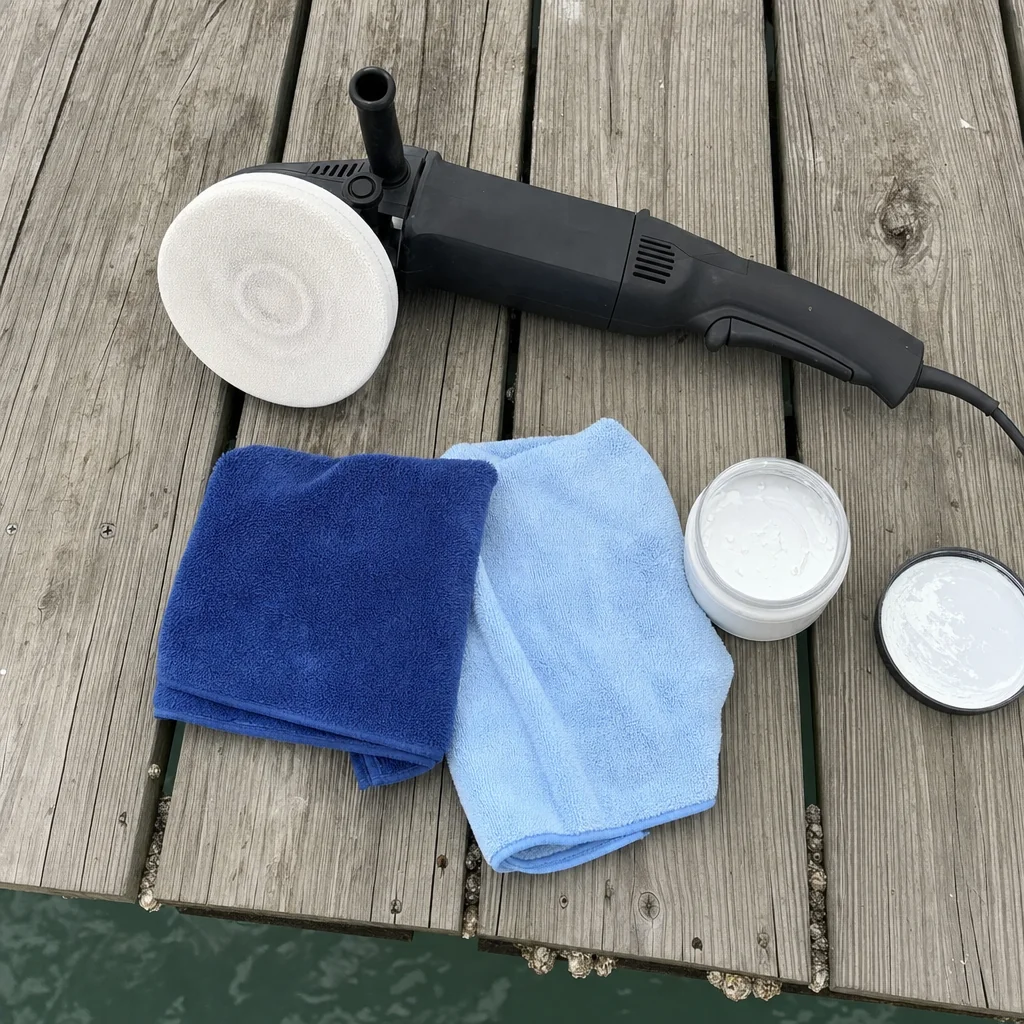
**Hull cleaning and oxidation removal** — Fiberglass oxidizes over time, leaving a chalky, dull finish. Detailers use compound polishes and rotary or dual-action polishers to cut through that layer and restore the gel coat’s original gloss.
**Waxing and sealant application** — After polishing, a marine-grade wax or polymer sealant is applied to protect the gel coat from UV rays and water intrusion. This step is what gives a freshly detailed hull that deep, mirror-like shine.
**Teak and wood treatment** — Teak decking and trim need specific cleaners and brighteners to remove graying and salt deposits, followed by a teak oil or sealant to keep the wood from drying out and cracking.
**Upholstery and canvas care** — Vinyl seating, canvas covers, and Bimini tops are cleaned with pH-balanced products and then treated with UV protectants to prevent cracking and fading.
**Metal polishing** — Stainless steel cleats, railings, and hardware are polished to remove water spots, rust staining, and oxidation.
**Bilge and interior cleaning** — A detail isn’t complete without addressing the interior. Bilges, storage compartments, and living spaces are cleaned and deodorized.
Why Saltwater and Sun Make Regular Detailing Non-Negotiable
Boats kept in saltwater environments face accelerated deterioration compared to freshwater vessels. Salt crystals are abrasive and hygroscopic — they actively draw moisture into microscopic surface cracks, which speeds up oxidation and corrosion. Even after rinsing, salt residue can linger in joints, hardware threads, and porous surfaces.
UV damage is equally aggressive. Marine environments offer little shade, and reflected UV from the water’s surface effectively doubles the exposure your boat’s surfaces receive. Without a protective wax or sealant layer refreshed regularly, gel coat breaks down, vinyl becomes brittle, and canvas fades and weakens structurally.
The practical takeaway: boats that are detailed consistently — typically once or twice per season depending on use and environment — retain their structural integrity and appearance far longer than those that aren’t.
How Detailing Protects Your Investment Over Time
Boats depreciate, but the rate of depreciation is heavily influenced by condition. A vessel with well-maintained gel coat, clean upholstery, and polished hardware will command significantly more on the resale market than one with heavy oxidation, cracked vinyl, and corroded fittings.
Beyond resale value, regular detailing can actually reduce long-term maintenance costs. Catching early signs of corrosion on hardware, small stress cracks in the gel coat, or mildew growth in the bilge during a detail means addressing minor issues before they become expensive repairs. Detailers often notice problems that owners overlook simply because they’re examining every surface up close.
There’s also the practical matter of performance. A clean, waxed hull creates less drag through the water, which can translate to modest fuel savings over a full season — particularly noticeable on larger vessels or those used frequently.
Choosing Between DIY and Professional Detailing
Some boat owners handle basic detailing themselves, and for routine maintenance between professional visits, that’s entirely reasonable. Rinsing after each use, applying a quick detailer spray, and keeping the interior clean are all manageable DIY tasks.
However, the more involved work — compound polishing oxidized gel coat, properly treating teak, or doing a full hull wax — requires specific tools, products, and technique. Using the wrong compound grit or applying too much pressure with a polisher can permanently damage gel coat. Professional detailers carry the right equipment and have the experience to work efficiently without causing harm.
For most boat owners, the practical approach is professional detailing once or twice per season for the full treatment, combined with regular owner maintenance in between. That combination keeps the vessel in top condition without requiring every boat owner to become an expert in marine surface chemistry.