Why Timing Everything Around Boating Season Matters
For boat owners along the North Carolina coast, the window between late March and early June is everything. If your vessel isn’t running when the water warms up, you’re watching the season slip away from the dock. That’s why finding reliable boat repair wilmington has to happen before problems become emergencies. The demand for qualified marine mechanics spikes hard in spring, which means shops fill up fast and wait times stretch out. Getting ahead of that curve — or at least understanding it — can save you weeks of frustration.
The Most Common Engine Problems Wilmington Boaters Face
Salt air, humid summers, and extended periods of inactivity are a tough combination for any marine engine. The most frequent issues marine mechanics see in the Wilmington area include:
- **Corroded electrical connections** from prolonged exposure to saltwater spray
- **Impeller failure** in raw-water cooling systems, often caused by running in shallow, sandy water near the Cape Fear River or local inlets
- **Fuel system problems** — gummed carburetors or clogged injectors after a boat sits unused through winter
- **Overheating** tied to blocked cooling passages or thermostat failure
- **Outdrive and lower unit damage** from striking submerged debris
Many of these issues develop slowly and quietly. A boat that started fine last October may not start at all in April. Scheduling a pre-season inspection — not just an oil change — is the single most effective way to catch these problems before they strand you offshore.
On-Site vs. Haul-Out Repairs: What's Worth It
One of the biggest pain points for Wilmington boat owners is the logistics of getting repairs done. Hauling a vessel to a distant shop means trailering costs, storage fees, and days or weeks without your boat. For many repairs, that’s simply unnecessary.
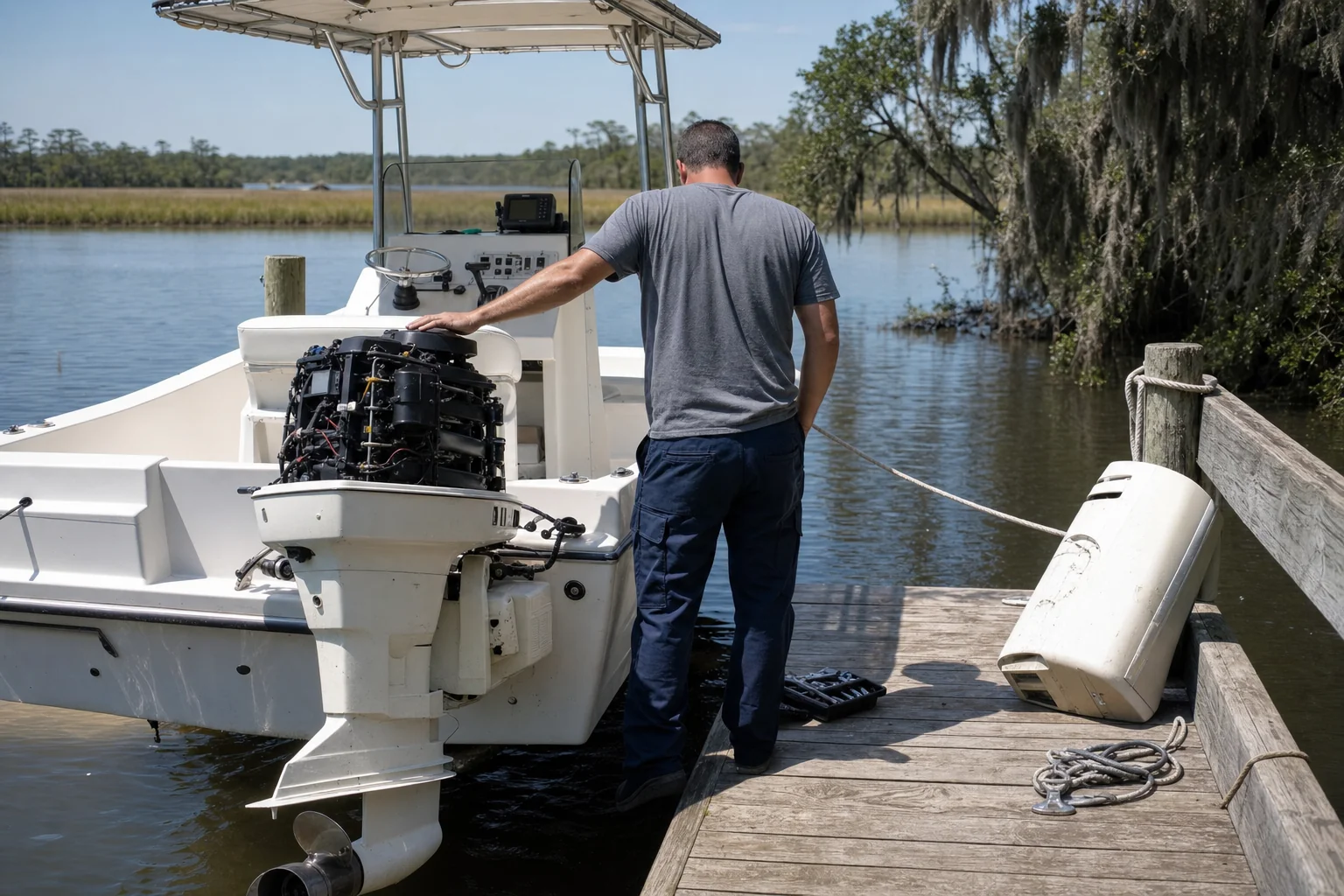
A qualified mobile marine mechanic can perform a wide range of diagnostics and repairs directly at your marina slip, boat ramp, or storage facility. Engine tune-ups, electrical troubleshooting, impeller replacements, battery system work, and many fuel system repairs can all be handled on-site with the right tools and experience. The key is finding a technician who is genuinely equipped for mobile work — not just someone who prefers it for convenience.
Haul-out is still the right call for hull repairs, below-waterline work, major outdrive rebuilds, or anything requiring a lift and a controlled environment. Knowing which category your repair falls into helps you avoid paying for unnecessary haul-outs or, on the flip side, delaying work that actually needs a proper facility.
Hurricane Season and the Second Wave of Repairs
Wilmington sits squarely in North Carolina’s hurricane corridor. After a significant storm, the demand for marine repair services surges again — sometimes sharply. Storm damage can range from cosmetic hull scrapes and loose fittings to flooded engines, snapped steering cables, and electrical systems soaked with bilge water.
If your boat took on water or was tossed around during a storm, it’s worth having a marine mechanic do a full systems check even if the damage looks minor on the surface. Saltwater intrusion into an engine or electrical panel can cause problems that don’t show up for weeks. Catching that damage early is far less expensive than dealing with the compounding failures that follow.
After a major storm, schedule service as quickly as possible. Technicians get booked out fast, and insurance-related repairs add another layer of scheduling complexity.
What to Look for in a Wilmington Marine Mechanic
Not all mechanics who work on engines are qualified to work on marine systems. When evaluating a technician or shop, look for:
- **Manufacturer certifications** — Mercury, Yamaha, Honda, Evinrude, and Volvo Penta all have their own certification programs. A certified tech has documented training on your specific engine platform.
- **Experience with your vessel type** — outboard, sterndrive, and inboard systems are meaningfully different. So are fiberglass runabouts versus commercial or center console boats.
- **Willingness to provide a written estimate** before starting work, including parts and labor broken out separately.
- **Familiarity with local conditions** — a mechanic who regularly works in Wilmington-area marinas understands the specific wear patterns that salt, sand, and tidal water create.
Word of mouth from other boaters at your marina is still one of the most reliable ways to find a trustworthy technician. Local boating communities — at marinas along the Intracoastal Waterway, at boat ramps near Wrightsville Beach or Carolina Beach — tend to share recommendations freely.
The Bottom Line
Boat ownership along the Wilmington coast is genuinely rewarding, but it requires proactive maintenance and a mechanic you can count on. Don’t wait until your engine won’t start to start looking for help. Build a relationship with a qualified marine mechanic before the season peaks, understand what can be fixed on-site versus what requires a haul-out, and keep storm damage on your radar every fall. That approach keeps your boat in the water — which is exactly where it belongs.