Why Catching Problems Early Saves You Money
Most boat owners don’t think about boat lift repair until something has already gone wrong — a motor that won’t run, a cable that snapped, or a platform sitting crooked in the water. The problem is that by the time a lift fails visibly, the damage is often more extensive (and more expensive) than it would have been if caught a few months earlier. Regular inspection and early intervention are the keys to keeping your lift functional and your boat protected season after season.
Common Warning Signs That Your Boat Lift Needs Attention
Knowing what to look for makes a huge difference. Here are the most common indicators that your lift is developing a problem:
- **Unusual sounds during operation** — Grinding, squealing, or clunking noises from the motor or cable drum are red flags. These often signal worn bearings, a fraying cable, or a motor struggling under load.
- **Uneven lifting** — If one side of the cradle rises faster than the other, the cables may be worn unevenly or the sheaves (pulleys) may be damaged. This puts lateral stress on your boat’s hull.
- **Slow or sluggish motor response** — A motor that hesitates, runs hot, or trips the breaker repeatedly may be overloaded, have a failing capacitor, or be drawing too much current due to a mechanical bind.
- **Visible rust or corrosion** — Surface rust on structural steel is cosmetic, but pitting corrosion on cables, bolts, or load-bearing welds is a structural concern that needs immediate evaluation.
- **Cable fraying or kinking** — Even a few broken strands on a lift cable are enough reason to replace it. Cables don’t fail gradually — they fail suddenly.
- **Water in the motor housing** — Saltwater environments are especially hard on electrical components. If you see moisture, corrosion inside the motor cover, or tripped GFCI outlets, get an electrician or lift technician involved quickly.
The Most Common Boat Lift Repairs
Understanding what technicians typically fix helps you have informed conversations and avoid being caught off guard by a repair estimate.
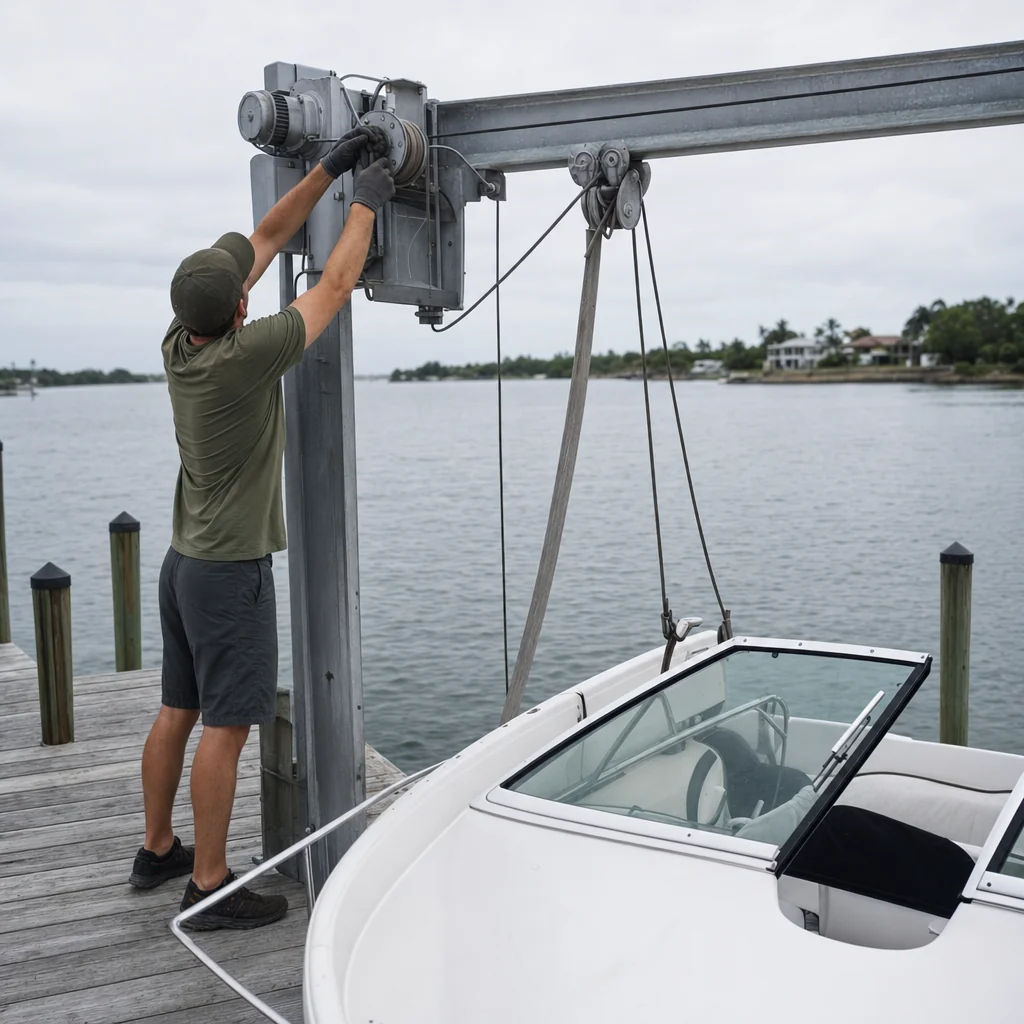
**Cable replacement** is one of the most frequent jobs. Lift cables stretch, fray, and corrode over time. Replacement involves re-spooling the drum and re-tensioning both sides to ensure level lifting — it’s not a straightforward DIY task.
**Motor and gearbox service** is another common repair. Motors can burn out, capacitors can fail, and gearboxes can lose lubrication or strip gears. In some cases, a motor rewind or full replacement is the most cost-effective path.
**Sheave and pulley replacement** matters more than most people realize. Worn sheave grooves cause cables to jump or wear unevenly, accelerating cable failure.
**Bunks and cradle adjustment** are often overlooked but important for hull protection. Waterlogged or misaligned bunks can damage fiberglass hulls over a single season.
**Electrical repairs** — switches, wiring, control boxes, and remote systems — are especially common in saltwater environments where corrosion attacks connections quickly.
How Often Should a Boat Lift Be Inspected?
A general rule of thumb is to do a thorough visual inspection at the start of each boating season and again at haul-out. That means checking cables for fraying, looking at all fasteners and welds for corrosion, testing the motor under load, and lubricating sheaves and moving parts according to the manufacturer’s guidance.
If your lift is used heavily — daily or near-daily — or if you’re in a saltwater or brackish environment, consider a mid-season check as well. Salt accelerates corrosion dramatically compared to freshwater settings, and components that would last many years in a lake environment may need attention every couple of seasons near the coast.
DIY vs. Calling a Professional
Some maintenance tasks are genuinely owner-friendly: cleaning the lift, lubricating sheaves with appropriate grease, tightening visible fasteners, and keeping the motor cover dry and sealed. These are worth doing regularly.
However, cable replacement, motor repair, structural welding, and anything involving the electrical system should be handled by a qualified technician. Boat lifts operate under significant load, and an improperly repaired lift can drop a boat — causing hull damage, dock damage, or injury. The cost of professional repair is almost always far less than the cost of a dropped boat.
When choosing a technician, look for someone with direct experience servicing the brand and type of lift you own. Hydraulic lifts, vertical lifts, and PWC lifts all have different service requirements, and experience with your specific system matters.
Keeping Your Investment Protected
Your boat lift exists to protect your boat — but the lift itself needs protection too. Staying ahead of wear, addressing small issues before they cascade into major failures, and working with a knowledgeable local technician are the most reliable ways to extend the life of your lift and avoid the stress of an unexpected breakdown during boating season.