The Hidden Cost of Ignoring Outboard Problems
Most boat owners notice something feels off long before they act on it — a rough idle, harder-than-usual starting, or a faint burning smell after a run. Putting off outboard repair is one of the most common and costly mistakes recreational boaters make. What starts as a minor carburetor issue or a worn impeller can escalate into a seized engine or a ruined lower unit if left unchecked. The earlier you catch a problem, the simpler and cheaper the fix tends to be.
Common Warning Signs Your Outboard Is Telling You Something
Your engine communicates through symptoms. Learning to read them saves you money and keeps you safe on the water.
**Hard starting or no-start conditions** are often traced back to fuel delivery problems — dirty carburetors, failing fuel pumps, or degraded fuel lines. On fuel-injected models, a faulty throttle position sensor or clogged injectors are frequent culprits.
**Overheating** is another red flag. Outboard cooling systems rely on a water pump impeller to circulate raw water through the engine. Impellers are rubber and degrade over time — most manufacturers recommend replacing them every season or every hundred hours of use. If your temperature warning light trips or steam appears near the cowling, shut the engine down immediately.
**Loss of power or poor acceleration** can point to a worn or damaged propeller, a clogged fuel filter, or ignition issues like fouled spark plugs and failing coils. Sometimes the fix is as simple as swapping plugs; other times it signals deeper internal wear.
**Excessive smoke** — particularly blue or white smoke — often indicates oil burning or a cooling issue, both of which warrant a professional inspection before your next outing.
What a Qualified Outboard Technician Actually Does
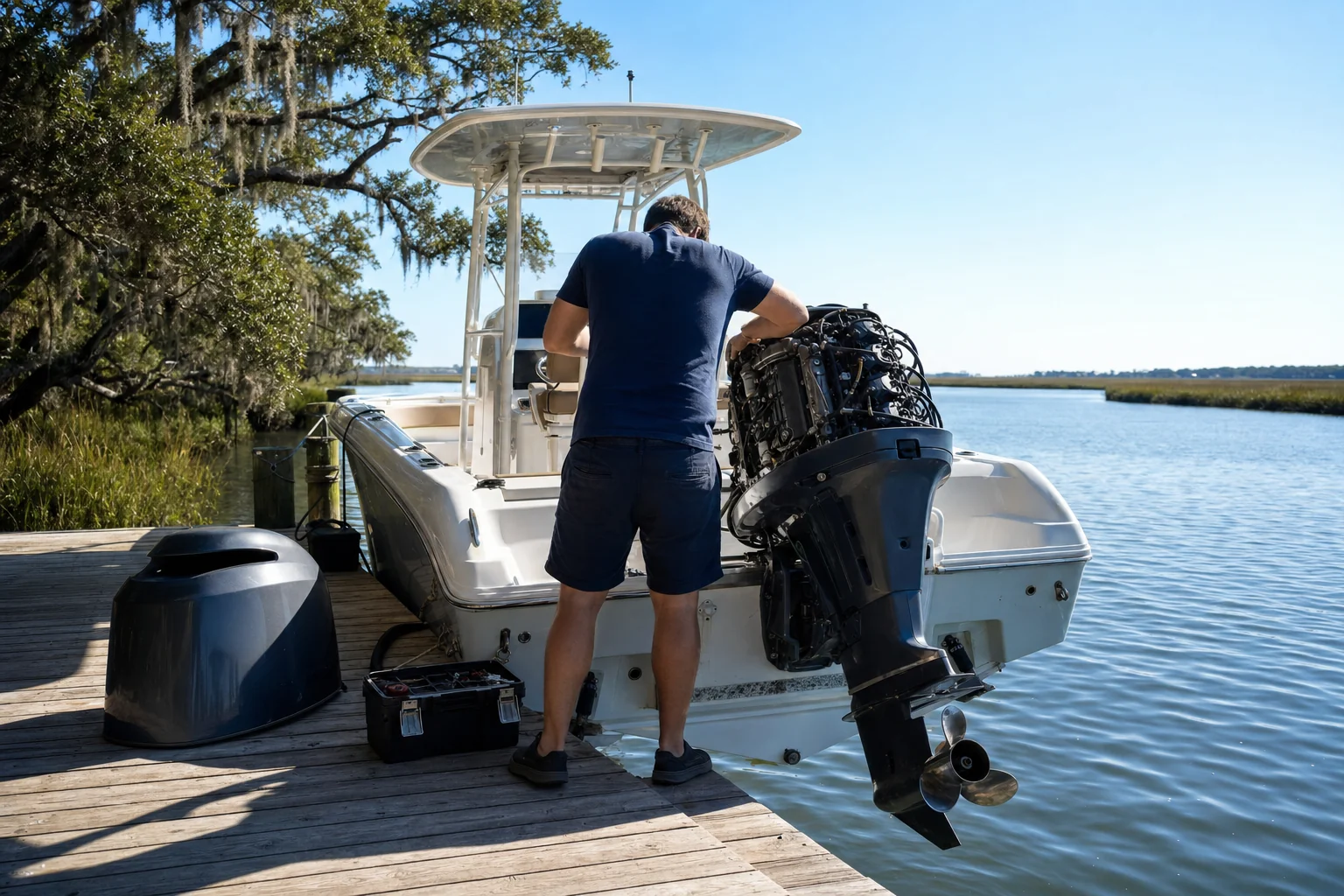
A competent marine technician does far more than swap parts. During a proper diagnostic visit, a technician will connect a scan tool to read fault codes on modern EFI engines, perform a compression test to assess cylinder health, inspect the lower unit for water intrusion (milky gear oil is a dead giveaway), and check throttle and shift linkage for smooth, precise operation.
They’ll also examine the fuel system for ethanol-related damage — a real concern since most pump gas now contains ethanol, which degrades rubber components and absorbs water over time. A thorough inspection gives you a complete picture of your engine’s health, not just a patch on the immediate symptom.
Seasonal Maintenance vs. Reactive Repairs
The best outboard repair is often the one you prevent through consistent maintenance. A pre-season tune-up typically includes fresh spark plugs, a new fuel filter, impeller replacement if it’s due, gear lube change in the lower unit, and a full inspection of belts, hoses, and electrical connections.
Winterization matters just as much. Flushing the cooling system, fogging the cylinders with storage oil, and stabilizing the fuel prevents corrosion and varnish buildup that causes headaches come spring. Skipping these steps is one of the primary reasons engines need costly repairs after sitting for several months.
Building a relationship with a local marine technician means they get to know your specific engine’s history — which makes diagnosing future problems faster and more accurate.
Choosing the Right Repair Shop for Your Outboard
Not every small engine shop has the training or tooling to work on marine outboards. Look for a shop that employs technicians certified by the major outboard manufacturers, or at minimum has documented experience with your engine brand. Yamaha, Mercury, Honda, Suzuki, and Evinrude/BRP all have specific service procedures and proprietary diagnostic software.
Ask whether the shop uses OEM (original equipment manufacturer) parts or aftermarket alternatives. OEM parts generally offer better fitment and longevity, though quality aftermarket components can be appropriate in some situations — a good technician will be transparent about the trade-offs.
Also ask about labor rates and whether they provide a written estimate before work begins. A reputable shop will document what they found, what they recommend, and why — giving you the information to make an informed decision rather than pressuring you into unnecessary work.
Getting More Life Out of Your Engine
Modern outboards are remarkably durable when properly maintained. Four-stroke engines routinely run for thousands of hours with regular service. Two-stroke engines, while simpler in design, still require diligent attention to fuel mixing ratios and cooling system care.
The owners who get the most out of their motors are the ones who flush after every saltwater use, change their gear lube on schedule, and don’t ignore warning signs. Pair that habit with a trusted local technician, and there’s no reason a well-built outboard can’t outlast the boat it’s mounted on.